You scrub the shower door, rinse it, and step back. The glass still looks milky, especially near the bottom or wherever water runs down. Before looking for a glass polishing service in Orlando, it helps to work out whether you are seeing removable buildup, fine scratches, or etching that cleaning cannot reverse.
Why Orlando Shower Doors Collect Haze
Hard water can leave minerals behind as droplets evaporate. The Orlando Utilities Commission reports average water hardness of 129 parts per million, roughly 7 grains per gallon, for its supply. The U.S. Geological Survey classifies hardness of 121 to 180 milligrams per liter as hard. These figures explain why spotting is plausible in OUC-served homes; they do not establish the condition of every Orlando residence’s water.
The problem compounds when shower spray dries on the same glass several times a day. Soap residue can mix with mineral deposits and make the surface look greasy or chalky. Areas near door seals, bottom edges, and frequently wet corners tend to show accumulation first. A white film that improves after a manufacturer-approved cleaning is different from a permanently altered glass surface.
Three Conditions That Look Similar
Mineral buildup often appears as spots, streaks, or irregular pale patches. It may feel slightly rough, and the outline often follows the path of water. A suitable cleaner and a soft cloth may lift some of it, although thick deposits sometimes require a professional cleaning approach approved for the specific enclosure.
Scratches usually appear as fine lines or swirls, especially under angled light. They may follow repeated wiping motions or sit where abrasive particles were dragged across the pane. A scratch changes the surface and cannot be washed away like soap film. Harsh scrubbing may add more lines while leaving the original haze unchanged.
Etching and glass corrosion can create cloudy or dull patches that persist after normal cleaning. Etching is not always easy to distinguish from residue just by looking at it. Cloudiness trapped between panes of a different kind of glazed unit would be another issue altogether, but that is not the usual construction of a simple shower door.
Try One Gentle Test, Then Stop
Start with the enclosure manufacturer’s instructions. Test a small, inconspicuous area using a recommended non-abrasive cleaner and a clean, soft cloth. Rinse fully and dry it, then compare the test patch with untreated glass in normal room light and daylight. If the patch clears, removable residue was probably contributing. If it looks the same, more aggressive cleaning is not the logical next step.
Do not diagnose scratch depth by dragging a fingernail across the surface or try a power-tool polishing kit. Also check whether the shower glass carries a protective treatment; some cleaners that seem harmless on bare glass can affect coatings. If the haze is extensive, take a photograph under consistent lighting so a professional can see the pattern.
Why Common Cleaning Hacks Can Backfire
Vinegar and abrasive cleaning powders appear frequently in online advice. They are not universally suitable for shower enclosures. The National Glass Association’s frameless shower guide advises avoiding vinegar-based or acidic cleaners, bleach-based cleaners, abrasive products, and harsh pads. It recommends checking product instructions when the glass has a surface treatment.
Metal scrapers, rough sponges, and hard debris in cloths create additional risks. The NGA’s architectural glass cleaning guidance emphasizes testing methods and using non-abrasive approaches. Cleaner contact with metal finishes, sealants, and coated surfaces matters too. If a household remedy is not approved for your glass and hardware, do not turn the whole enclosure into the test area.
When Professional Glass Polishing May Help
A glass polishing service in Orlando becomes worth evaluating when an enclosure remains cloudy after appropriate cleaning or shows fine surface scratches. A technician can examine the pattern and surface treatment to determine whether the issue is buildup, actual damage, or a mixture. Some suitable surface damage can be improved through controlled glass restoration, but not every etched or coated panel is a candidate. Excessive polishing can leave optical distortion, so a realistic result matters more than a promise of perfection.
Replacement may be the safer choice if the glass is cracked, chipped in a concerning area, unstable, or unsuitable for resurfacing. Professional polishing is a surface-restoration service, not a fix for broken safety glass.
Keep the Clarity You Recover
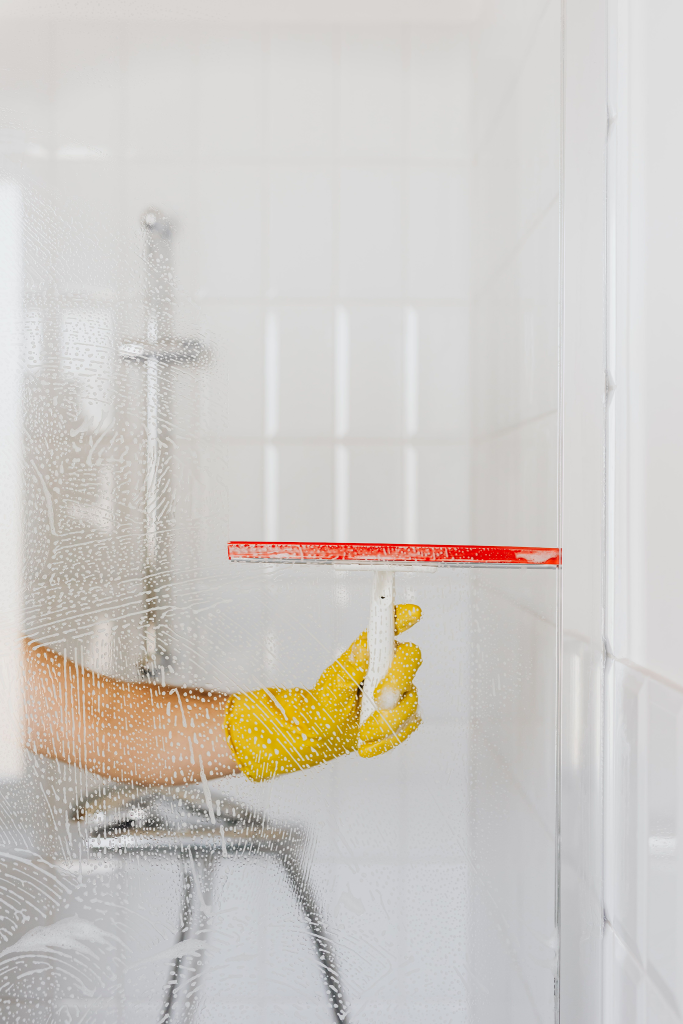
After showering, use a clean non-metallic squeegee and follow with a soft dry cloth, especially along the bottom edge where water collects. Keep grit off cleaning tools, rinse away product residue, and follow the glass coating manufacturer’s schedule. A few seconds of regular drying is generally more useful than a monthly session of hard scrubbing.
Request a Shower Glass Assessment
At SM Glass Scratch Repair, we provide mobile shower-glass scratch repair and surface restoration. If your enclosure stays cloudy despite careful cleaning, contact us to discuss a glass polishing service in Orlando and whether your particular glass is suitable for restoration rather than replacement.